Monday, March 10, 2014

cantos 19-30

the continuing of the presentations has been interesting. its strange to see the sins change to different themes though it doesn't really seem like the punishments are getting much worse, and it doesn't seem like the sins are either. it seems like it should get worse as you go down but it doesn't seem that way at all. all of the sins and punishments are terrible, but i cant see one as being much worse than another. one change that i am seeing is that the sins seem to be getting more creative. i dont think i have the creativity to come up with some of these things.

Canto 20 with the magicians seems interesting to me. i never thought magic to be a sin. i always saw it as a form of entertainment, as good as any other. and i don't think that it should ever be a sin to want to learn more like the astrologers. i think thats a good part of human nature that should be fed, because thats how we grow as a people. so the fact that that was a sin seemed a bit backwards to me, a little like their heads. the creativity of having their heads turned around seemed fascinating as well. i most certainly never would have thought of that. i also thought it to be strange that there was only one canto with being cut as a sin. it seems like half the punishments are burning, and i feel like being cut and burning are equally as popular. maybe this is just my own belief, but i thought there was a bit too much burning and not enough variety in other punishments.


cantos 1-18

i have really been enjoying learning about the canto's of hell. i think that all of the presentations have been really interesting and informative. the style of studying Dante's inferno is so much more enjoyable than what i have heard from in other classes. i find it to be very visually stimulating and interesting. i particularly thought canto one, or limbo, to be really interesting. i always thought that those who simply didn't believe in god simply went to purgatory. i thought it strange that it was something bad enough to go to hell for. it also shocked me how close that is to many people's lives. i have heard the story of feeling lost and without hope so many times that its just interesting that that is the punishment, forced to live the life that so many on earth are already living.

in learning about Dante's inferno i found it strange that committing suicide was deeper in hell than murder. i thought the punishments for both these cantos to be really creative. i thought it to be particularly symbolic that the murderers burned in the blood that they shed. i also thought the tree idea to be symbolic to the suicides. i also thought it to be a bit extreme because of the motives of those who choose that path.  those two cantos seemed particularly intriguing to me.

Saturday, February 15, 2014

Hell

hell is a place without anything good. it is the ultimate time of everything bad happening in the worst way possible. hell is colorless and cold without much in it. it has only what it needs to bring people fear, pain and loss. you can get out of it though for some that can be unlikely. and everyone at least visits it.

1. to some extent i think that almost everyone deserves to go to hell. i think that everyone had committed crimes worthy of that. it could also go that no one deserves to go to hell. i think that everyone has committed crimes and good things, and i cant see how one can out weigh the others. i have a hard time ranking crimes as more ok or worse. i think everyone will go through hell or has gone through hell. i don't think that anyone deserves to go to hell eternally. but i do think that everyone has sins that need to be punished as well as good things they have done that deserve reward. so everyone to me passes through hell before reaching heaven. anything sinful you do is worthy of sending you to hell.


2. the punishments in hell are to fit the person. this is because not everyone responds or hates the same things. hell is centered around how to punish the person in the most effective manner. it will put you in the situation most painful for the person.


3. my hell has no variation. if i go to hell, and if it is what i think it to be i will, it will be stagnent with no room for growth. hell is large enough to fit everyone but it is crowded. there is little room for movement and the constant busy exhaustion of being around people all the time. and the people cannot be blocked out. but even though there is the constant being around people it is impossible to make a connection.  its like being stuck in a place where everyone speaks a different language and you only get the down sides of being around people and none of the benefits. i do not think there is any sharp pain in hell, because i would rather feel pain than nothing, as demented as that sounds. i think pain is a slow ache that you cant ignore or get rid of. its jus there leaving an almost numb feeling, but a numbing ache. and it is cold and hopeless... like the feeling of being out in the cold too long without enough jackets, but only so cold, so you stay conscious through the cold.


4. hell does not choose to release you. in hell you are lost forever stuck in an insolvable maze. in hell there is no help, and there is no hope. in hell you loose all hope of ever escaping. it isn't necessarily eternal, but it feels like it when in hell. and you can only escape when you become aware. there are lots of exits in hell, its just hell is designed to keep your focus off them and onto the lost feeling, the hopelessness, the fear, the ache, the exhaustion or the loneliness. but if you become aware you can find help and escape. you have to be willing to ask for help, and willing of change. you stay there as long as you like. nothing forces you to stay, except your sins.


5. hell cannot have a symbol because it varies too much between people. i don't know how to put a symbol to all of the bad things that happen in the world. its impossible to describe it well enough with words and just as unlikely to use a symbol to describe it. we use the word hell to try to represent something thats hard for us to even fathom and its the closest symbol that i know of that we can make. we could draw a symbol but it would be hard for that symbol to mean anymore than the word hell.  a symbol for the hell i think i would go into would be a sand tunnel maze. i have constant nightmares of small sand tunnels that i have to crawl through that are so small you can only army crawl through them. this brings feelings of being trapped, lost and lonely and these are the things i struggle most with. i don't believe that my tunnel is the universal symbol for hell, i don't believe there is one, but that is mine.

6. the idea of wanting to send those you love to hell. if you love someone its hard to think that they deserve to go to hell. thinking of your friends or family in hell is hard and it hurts. its easy to send those you don't like or disagree with or simply don't know to hell. there is no feelings in your heart other than morality that would make you care that they're there. if you do believe in a hell then you have to believe that there are people there and you don't have any attachment to them. but once you start realizing that these people are loved too, even if they did really bad things and hurt lots of people like hitler did, they still have those that care about them, and they care about others as much as you do. these are mostly people who made mistakes and didn't realize that what they did was wrong. would you really send someone to hell for ignorance? would you like to be sent to hell for ignorance? would you like to live eternally in hell in constant suffering of everything you hate and dislike and what causes you pain and discomfort. sending yourself to hell is hard as well. hell does not have to be eternal and i believe that everyone goes there at some point. but everyone also gets to visit heaven for a time too.

Monday, February 10, 2014

poster week

this past week has been fun and chaotic. there has been a lot of stress trying to get the essay written and getting all of the necessary items for the poster. forgetting simple items such as tape has been really stressful in the making of our poster. there was always a rush to get the things done as quickly as possible while still trying to make it look good. i really enjoyed taking part in the poster project and enjoyed it more than the hero cycle poster. i really felt as though i played my part in helping out and coming up with cool ideas and loving the movie with my group. the finished project of our poster is something i am proud of. i honestly think we did a very good job on it. i enjoyed making the jellyfish and wrapping the presents making the id and badge and gluing on glass. creations like this are things that i love. there of course are things that could be better and in would change in hindsight but over all i am very proud of it.

after this project the movie we watched Seven Pounds has become a part of my soul. i have a deep emotional attachment to the movie now and am now in the process of making all of my friends watch it. this friday and monday my group got to present and it was fun and enjoyable to share our film with the class. i have also been enjoying watching the posters of other groups and have been really inspired by film. i now want to see all of the other movies. this week has also been really inspiring to me to get back to writing on my own and get a little bit more progress done on my novel. this week has been really enjoyable and inspiring to me.

Thursday, January 16, 2014

Odipus rex info


Oedipus Rex-
-man: Oedipus was a man with good intentions but a tragic out come. his story is based purely on fate. he tries to do what is right but in the end is condemned. 
-myth- The Myth of Oedipus Rex is much older than the play and the ancient greeks knew well of his story. they myth explains the inability to escape fate. oedipus is fated to kill his father and sleep with his mother. his parents upon hearing this tried to kill him to stop the prophesy. he instead is given and adopted by a different family. Oedipus does everything in his power to not fulfill his prophesy but in the end causes it all to happen. 

-play- the play is written off the myth of Oedipus and goes into depth and detail of the myth and plays it out in an understandable sequence. the play brings the audiences attachment to the character and in the end puts pity and fear into the audience. 


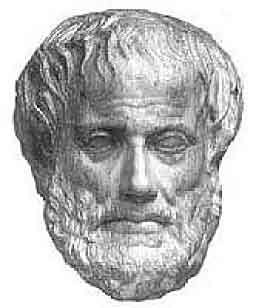
Aristotle- Aristotle was a student of Plato from age 18 to 37 in Athens. he later became a teacher to three different kings, Alexander the Great, Ptolemy, and Cassander, as head of the royal academy. he is thought to have been the last person to know everything there was for his time. He is one of the three best greek philosophers and has created western philosophy into what it is today and began the scientific process we still use today. 

-tragedy- Aristotle says that a good tragedy is serious, complete and of a certain magnitude. a play must be shown and not told and written in a clear cause and effect chain that could happen in any time or place. He believes that plot is the most important part of a tragedy and that the characters simply support it. 

-hubris- is an act of arrogance and strong pride, and acting extremely self-important. it's when someone shames or humiliated someone, not because they did something or will do something wrong but simply for self pleasure of the abuser. the concept that by treating someone badly will make their own self better and more superior. 


Greek theater- 
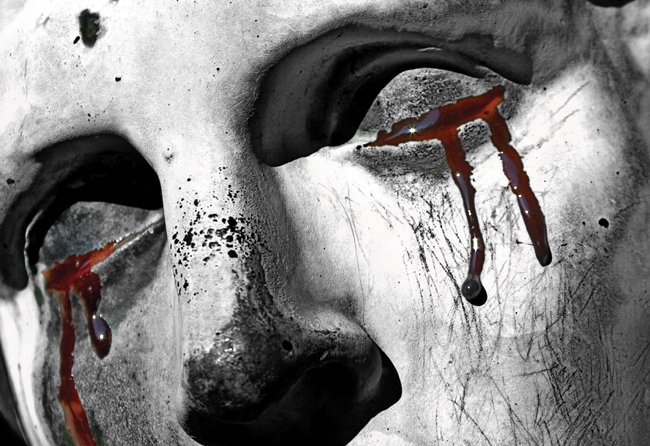
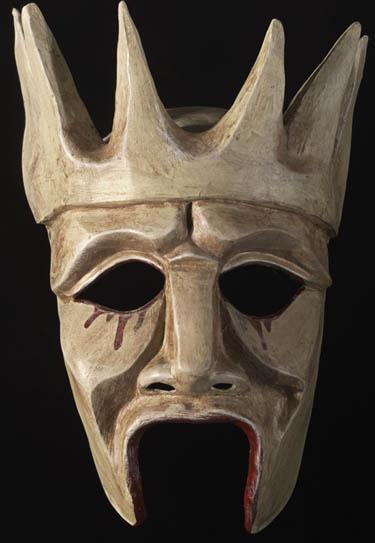
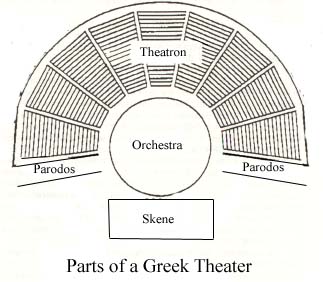
Greek theaters were usually outdoors without roofs and in the arrangement seen below. greek plays usually just had three actors that changed masks to change character. the masks covered the whole head of the actor with small holes for the eyes and mouth. the masks bring the character closer to the audience and allows for the audience to associate each mask with each character instead of the actors. 


Dramatic irony-
Dramatic irony is when the audience of a play, book, or film or other such creation know of events or other important pieces of information that the character is still unaware of. this can evoke an emotional response in the audience that makes them want to scream at the character to prevent them from committing foolish actions. this is great in tragedies when the audience knows of the tragic fate of the character and their actions simply fulfill it.

Sophocles was born into a wealthy family and had access to good education. he was physically attractive, had athletic ability, and was skilled at music. He wrote 123 dramas for the greek festivals and in the 30 times he competed he won 24 and may have never gotten lower than second place. 

Teiresias-
Teiresias was a prophet who could see the future through vision, he understood the language of the birds and could read their signs, as well as reading signs from fire or smoke, though he mostly relied on his connection to the underworld and the dead. Teiresias was blinded, some stories say Athena blinded him after seeing her bathe, though other stories simply say the gods blinded him for reviling their secret. Teiresias also spend seven years of his life as a woman, this was the result of displeasing the goddess Hera, though after 7 years he did the right thing and he was returned to his masculinity. 


Fate- to the greeks fate was unchangeable, it was what would happen to the person and nothing could be changed. the fate of a person was decided by the three fates of mythology that spun the thread of life and in the end cut it. the fates are said to be older than the gods and it is unknown how old they really are, and it is said that even the gods don't mess with them, and that they have spun the life of the gods as well as everything else. the fates are what create the fate of each individual and the world itself. it cannot be changed or fully known, and they write out the famous myths and stories of the greeks.


Monday, January 13, 2014

connection

Connection


Baraka, a beautifully put together film, makes connections to our first semester while bringing compassion and wonderment, impacting one like no other. in first semester we studied satire and bringing attention to the wrongs of this world, this film does that very well. it shows the ills of the world in an honest light allowing for change to them. just as the semester brought contrast to, the film brought contrast to the beautiful and dark of the world. it showed the wonders the world holds as well as the terrors. There are many more wonders that that Brussat spoke of. some of which include the powerful waves of the sea, forcing itself out of a hole in a rock, and the waves crashing across the shoreline rocks, demonstrating an almost incomprehensible power. the time lapses of the clouds in the sky give them a water like effect as they move and cascade across the sky rippling and moving almost as if it were a waterfall. the clips of the waterfalls themselves were powerful and peaceful. they cascaded in roars off the side of the cliff, in contrast to the peaceful green life surrounding it. these all invoke wonderment in someone. they are beautiful and powerful and leave one in awe of the world. seeing the many different tribes evokes a power within one’s being and brings a connection to the world. this brings out compassion, when there is connection compassion flows through, and through understanding and connecting with those yet undiscovered will bring the gift of compassion through.

The most impactful images through my eyes are the ones of destruction, sorrow, and separation from nature. the covered view of boxes for homes is saddening. there isn’t much beauty in those images. the lack of nature or access to better homes by the people is saddening. people deserve beautiful homes, not large or grandeur, just a nice place to live. the lack of nature to the people is saddening. though within that there are images of young boys and children bringing out feelings of compassion for the young, innocent beings doing what they can to enjoy life. simple joys such as kite flying and spendign time with friends. joy within the destruction and sadness is beautiful and impacting, and it stands out like a candle in darkness. the women in the cigarette factory give a caged feeling. the tedious, yet necessary task of rolling cigarette after cigaret for just enough money for the living of life. rolling cigarettes is a tedious, mind numbing task that seems to get nowhere. the same task over and over again feels caging and no true reward is brought, not to the mind and soul. the slowed time of the urban life in subways relaxes the merry-go-round, for a little bit, but the slowing seems forced, knowing that each person has another thought on their mind and tasks at hand. the beauty of the mind is wondrous, but none of the minds are rested. the life of the city is so rushed that the smallest breaks are forced and not used wisely. the fast motion of city life gives the effect of the rushed time we all live in. the clock ticked through time at a faster speed than it should, time goes by faster than we would all like it to. the burning of the baby chicks seemed the most impactful. it was shocking to see. the chicks are each beings with a life and a mind and a soul, whether the mind is as big as the human’s is out of question. the chicks are treated as if they were inanimate objects, without life. the lack of sight to the life is saddening. the cruelty was impactful, something i don’t think i’ll be able to forget. the sound sets the mood, if it is happy, sad, energetic, or peaceful. the sound goes with each image to give the appropriate mood for one to be in. the movement gives the view in which to see it, are you looking down on the world, is it below you, or is it so much greater than you can see? the movement of the camera gives life to the images being seen. the film’s goal is simply to teach. to teach of the world. it gives awareness to what is out there. it is easy to get sucked into the life you are living, as if it is the only life out there that matters. it is easy to forget the importance of others, and where items come from. its easy to forget how interconnected the human race really is to the world and only think about the here and now, and not everything else, and how great it is.


Monday, December 2, 2013

the lord of the flies


the lord of the flies was a beautiful, deep book with an astonishing amount of stuff and symbolism that it conveys. it has the different characters symbolize different aspects of human life and nature. it talks about the beast in all of us and how we must live with it “he felt himself facing something ungraspable” (Golding, 36). this talks about how there isn't a physical best. there isn’t something you can hunt and kill, because its in all of us. the book speaks about things such as religion. “a place where more sunshine fell” (Golding, 55) talks about this place that Simon, a religious figure, goes to that is lighter than the rest of the forest to meditate. this place holds many religious symbols such as rugs and candles and other such things. it also has the violent aspects of human nature as conveyed in characters such as Roger and Jack. Roger is a dark character that lives in the shadows and lives for darkness. “ Roger led the way straight through the castles, kicking them over” (Golding, 59) though kicking over sand castles doesn’t seem like that harmful of an act, it is done from the darkness in Rogers heart as he enjoys seeing the childrens pain as he kicks sand in their eyes.  the book is saturated with deep symbols and stuff about human nature it is astounding.